How to balance internal and external focus, in order to optimize both?
by M. Govindan Satchidananda
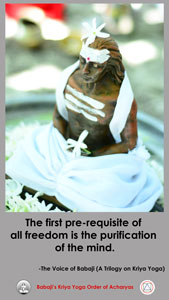
By "internal focus" one refers to the Witness state of consciousness. By "external focus," one refers to concentration on the tasks at hand, or being attentive. Both states are to be valued, and have their time and place. What we seek in Yoga is not either or only one of these, but rather to purify our mind of the ego-sense, which causes us to feel that "I am the doer,." Or "I am the body-mind-personality."
"Internal focus" is what most meditative or spiritual traditions encourage, and it provides a much needed balance to the ordinary materialistic and sensual based mentality which modern culture encourages. Particularly today, our culture encourages us to believe that the more things we can experience, the happier we will be. However, this encourages one to confuse happiness, which is always an internal experience with external things, persons or phenomena. Meditative and sprititual tradtions begin by helping the beginner to slow down, simplify, and turn within, so as to find one's calm inner being, one's center, one's spirit or soul, which has the qualities of awareness, light, equanimity, transcendence, joy and peace.
There is a risk however, that the discovery of one's spiritual dimension may bring a denial of the other dimensions of one's life: the physical, emotional, mental and intellectual, particularly in those cultures or traditions which are mayavadin, that is see the world as an objective illusion. Where the tradition encourages for example a renunciation of the world. This is the predominant tradition in Asia, even today, as it was in the West until the time of the Renaissance. In our modern materialistic culture, however, only a few are tempted to go to such an extreme. The vast majority of meditators in the West use their practice as a means of relieving the stress of their daily lives, and at best as a means of cultivating the spiritual dimension, which has been normally neglected.
At some point, however, the spiritual dimension's inherent joy and well being begins to overflow into one's daily life, and one begins to feel a wide calm, even peace and acceptance as to how things are, even as one goes about the routine activities and the challenging experiences which our ordinary life confronts us with. However, everyone is still running on their old programs, or samskaras, and until these are sufficiently weakened, and replaced with more sattvic or wisdom based tendencies, such states of calm and peace tend to be overwhelmed by the events of daily life.
Therefore, the question of how to balance the "internal focus" with the "external focus," is essentially answered by the prescription "to be calmly active and actively calm." Most of the techniques of Yoga have as their purpose the cultivation of this middle path, known as sattva, which is characterized by the qualities of balance, lightness, awareness, peace, calm, intelligence. As our practice of Yoga deepens and widens, sattva grows even in our daily life. Because our human nature is so habitual, however, one must engage in Yogic sadhana regularly, patiently and persistently. One must also be well informed by a "road map" or classic text of Yoga, so as to be able to recognize the pitfalls, the obstacles and how to surmount them: "Disease,dullness, doubt, carelessness, laziness, sense indulgence, false perception, failure to reach firm ground, and instability." (Yoga Sutra I.30) Sadhana purifies us of our samskaras, and enables us to act consciously, rather than to react habitually.
By cultivating presence, awareness comes, and when awareness comes, bliss comes as well. In such a state of being, consciousness and bliss, all actions can be performed without the distortion of the ego. One acts as an instrument, skillfully, without attachment to the results; one's joy is Self-evident, and independent of whether or not the action produces the results desired or expected.
In terms of practice, cultivate the Witness state first during routine activites, like dishwashing, housecleaning, walking, eating, bathing, from the beginning to the end, continuously. As the Witness state becomes more stable, remember it during activities which require more concentration or attention: repairing something, shopping, listening to someone speak on the telephone; later when it is more firmly established, cutlivate it while the mind is engaged in reading or other activities which require much concentration. Even then, part of the consciousness can remain as a Witness, in a state of "internal focus," while the rest of the conciousness is concentrating on the tasks or challenges at hand, ie. "external focus." If most of your time is absorbed in challenging activities which require much "external focus" then imagine, and then find ways to simplify it, and to reserve more time for pastimes which will enable you to cultivate "internal focus."
Why is this important? It is what I like to refer to as "the game of consciousness." Every time you play it, that is, you practice being present and aware, that is the Witness, bliss appears. Guaranteed! And everytime you forget to be the Witness, suffering appears. Automatically. You can easily test this. It is the only game in life where you always win. In all the other games, you ultimately lose, because only Presence, Consciousness and Bliss are eternal and infinite. Everything else is limited by time or space, and hence, temporary.
Copyright: M. Govindan Satchidananda, January 2005